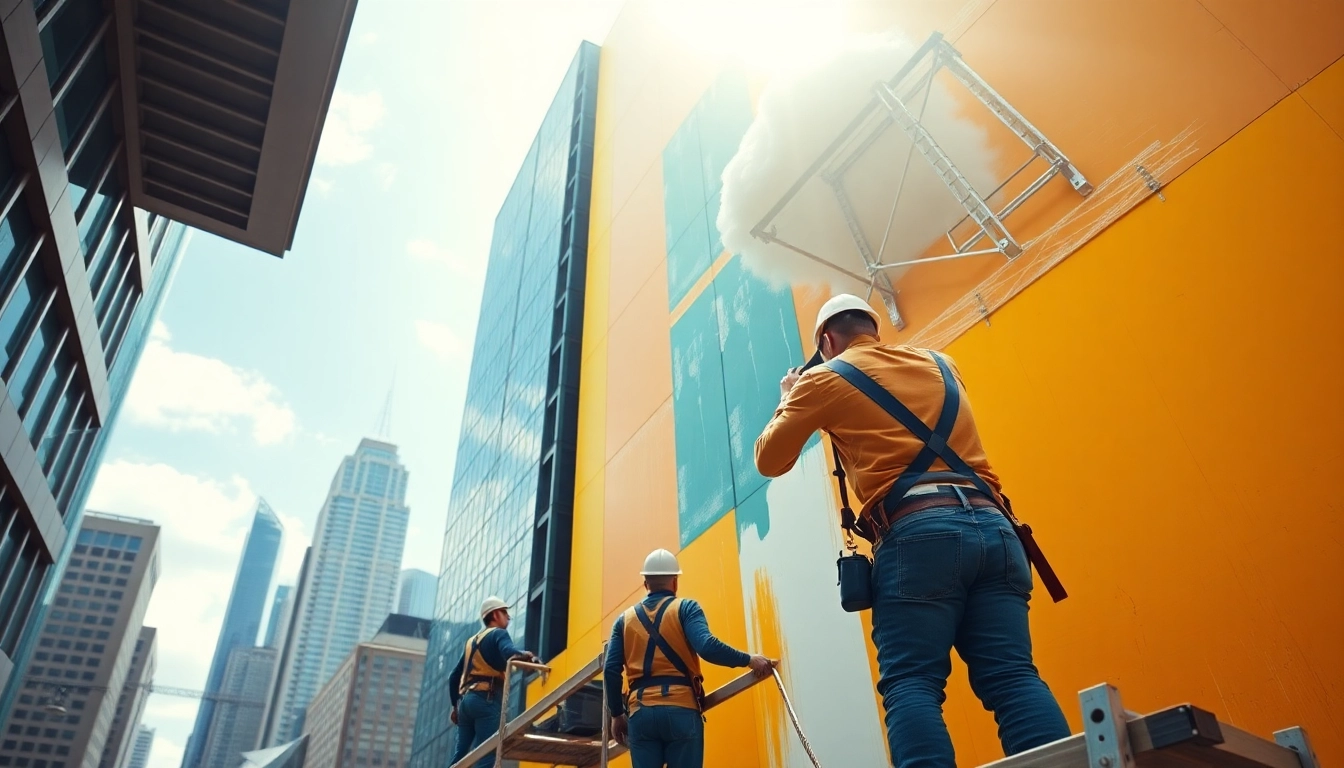
Understanding Commercial Painting
What is Commercial Painting?
Commercial painting refers to the specialized profession of applying paint and coatings to commercial properties, including office buildings, retail establishments, warehouses, and other business venues. Unlike residential painting, which often focuses on aesthetics for individual homeowners, commercial painting takes into account both functionality and appearance tailored to business requirements. A successful commercial paint job not only enhances the visual appeal of the space but also involves thorough preparation, including surface cleaning, priming, and the use of high-performance paints meant to withstand wear and tear.
Importance of Professional Services
Employing professional commercial painting services ensures that business premises are painted correctly the first time around, mitigating future issues that could result from inexperience. Professionals bring structural insights about different materials and appropriate products that can enhance durability, which saves costs on future repainting. Moreover, skilled painters have the necessary licenses and insurance to safeguard clients against potential liabilities. With their expertise, businesses can also save significant amounts of time and focus on their core operations while leaving the painting work in the hands of specialists.
Types of Commercial Painting Projects
Commercial painting projects can vary widely based on the specific sector and style of the business. They may consist of:
- Interior Painting: Includes wall painting, decorative finishes, and coatings for various surfaces like concrete, wood, or drywall.
- Exterior Painting: Involves paint applications designed to withstand outdoor elements, often requiring weather-resistant products.
- Industrial Painting: Tailored solutions for factories, warehouses, and manufacturing areas, focusing on safety and durability standards.
- Retail Space Painting: Unique approaches to enhance brand identity that align with the company's theme and customer experience.
- New Construction Painting: Preparation and applications on newly built structures, ensuring protective and aesthetic qualities are met.
Benefits of Hiring Professional Commercial Painting Services
Quality and Expertise
Investing in professional commercial painting brings significant quality to the final product. Professional painters are trained to handle various surfaces and materials, ensuring that the paint adheres properly and exhibits an even finish. They understand the nuances of interior and exterior conditions and choose the appropriate products to suit different projects. Their expertise not only guarantees superior workmanship but also the correct application techniques that protect a business’s investment for years to come.
Time Efficiency and Cost Effectiveness
Timelines for repainting commercial spaces can be tight, especially when operations must continue smoothly. Professionals can execute the job in a fraction of the time it would take an inexperienced person, ensuring minimal disruption to business activities. Furthermore, the initial investment in hiring experts tends to pay off, as the longevity of higher-quality finishes can significantly reduce the frequency and cost of future painting projects.
Enhanced Aesthetic Appeal
The aesthetic appeal of a commercial space has direct implications on branding and customer retention. Attractive and well-maintained environments foster positive impressions on clients and contribute to an inviting atmosphere. A professional commercial painter can provide a range of options that align with a business’s brand identity, ensuring colors and finishes are chosen appropriately and applied flawlessly.
Choosing the Right Commercial Painting Contractor
Factors to Consider
When seeking the right commercial painting contractor, several considerations should be made:
- Licensing and Insurance: Verify that potential contractors are fully licensed and insured to perform commercial painting work.
- Experience: Assess prior experience specifically in commercial painting. Experienced contractors will have knowledge of the right techniques and materials.
- Reputation: Investigating online reviews and testimonials can provide insights into the reliability and quality of work offered by the contractor.
- Quote and Transparency: Choose contractors who provide clear, detailed quotes without hidden costs, ensuring you understand the scope of services offered.
Questions to Ask Potential Contractors
In your selection process, consider asking the following questions to gauge the competence and reliability of potential contractors:
- How long have you been in the commercial painting business?
- Can you provide references or showcase previous commercial projects?
- What types of paint products do you recommend and why?
- How do you ensure the safety and protection of the workspace during the painting process?
Evaluating Previous Work
Before making any commitments, obtaining evidence of an applicant’s past work is essential. Ask for access to portfolios or visit current job sites if permissible. Look for clarity in the finish, alignment with the planned design, and overall professionalism in execution. It’s also beneficial to reach out to previous clients for direct feedback on their experience with the contractor, including timeliness, efficiency, and the quality of after-service support.
Innovative Techniques and Trends in Commercial Painting
Sustainable Painting Practices
A growing trend in commercial painting is the focus on sustainability. Many professionals now use eco-friendly paints low in volatile organic compounds (VOCs) to promote cleaner indoor air quality. Additionally, practices such as proper waste management and recycling of leftover materials help companies meet environmental standards and appeal to eco-conscious customers.
Latest Color Trends for Businesses
Color psychology plays a vital role in commercial painting. Recent trends have seen businesses adopting hues that evoke specific emotions or associations. For instance, warm tones can stimulate appetite, making them popular in restaurants. In contrast, calm blues and greens often appear in healthcare settings to promote trust and tranquility. Professional painters can guide businesses on selecting colors that reflect their brand while resonating positively with customers.
Advanced Tools and Technologies
The landscape of commercial painting is evolving swiftly with the introduction of advanced tools and technologies. Innovations like spray painting techniques, which allow for faster application and reduced overspray, have become essential in large projects. Additionally, digital project management tools enable better communication between contractors and clients, ensuring efficient progress tracking and adjustments where necessary. These advancements directly correlate to enhanced quality and reduced timelines for commercial painting jobs.
FAQs About Commercial Painting
How often should commercial properties be repainted?
The frequency of repainting varies based on environmental factors, usage, and the quality of previous work. Typically, commercial properties may need repainting every 5 to 7 years.
What paint types are best for commercial spaces?
High-quality, durable paint types such as acrylic, enamel, or matte finishes are favored for commercial spaces due to their durability and maintenance requirements. The choice often depends on the specific area being painted.
Can you paint while the business is open?
Yes, many professional painters can work during business hours, using techniques that minimize disruption. This is common in environments like retail spaces where off-hours work may not be practical.
What is the average cost of commercial painting?
The costs can vary widely based on the size of the space and complexity of the job, ranging from $2 to $6 per square foot. Requesting quotes from contractors can provide a clearer idea of specific needs and budgets.
How to prepare for a commercial painting project?
Preparation involves clearing the site of furniture, protecting floors and nearby surfaces, and addressing any repairs needed before painting. Collaborating with the painting team for a thorough plan also enhances preparation.
Contact Information
Address:Branam Brushworks LLCCall Us:+12076168892