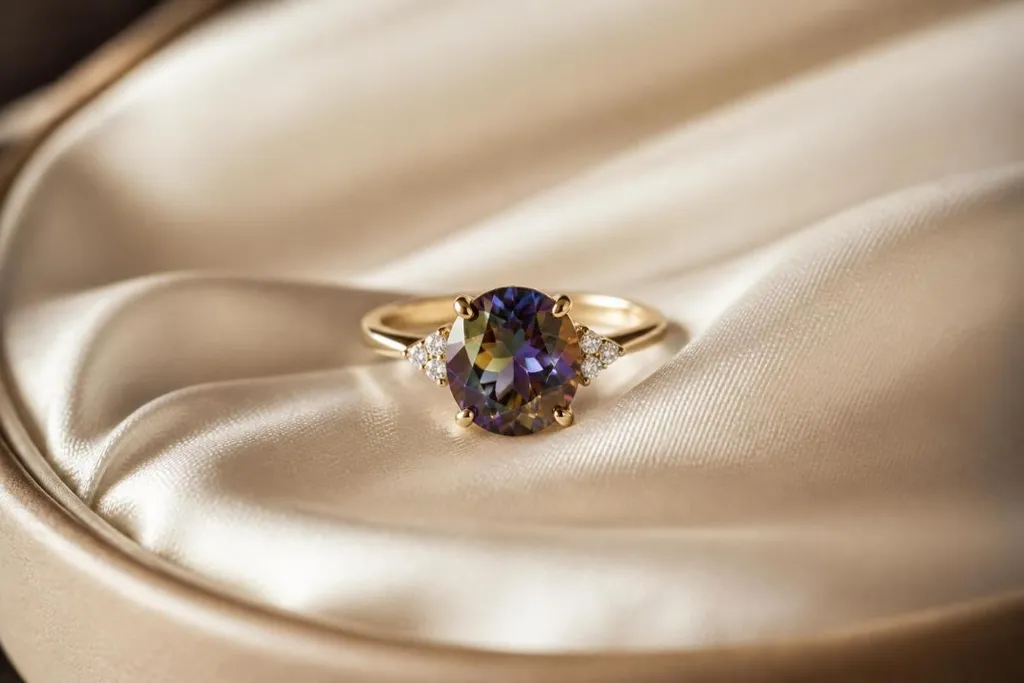
Colour can make a jewellery collection feel unmistakably personal. While colourless stones offer extraordinary versatility, gemstones introduce another dimension: a rich blue, vivid green, romantic pink or warm sunset tone can change the character of even the simplest ring, pendant or pair of earrings. The key is choosing colour with enough intention that individual pieces complement one another rather than becoming difficult to style.
For anyone looking to order gemstone jewellery from Lily Arkwright, building a collection is best approached gradually. Consider which colours already appear in your wardrobe and existing jewellery, then think about how often each new piece will realistically be worn. Lab-grown sapphires, emeralds, rubies and other coloured gemstones can provide distinct personalities across rings, earrings, necklaces and bracelets, allowing a collection to evolve without relying on one conventional palette.
Begin With a Colour You Will Actually Wear
A favourite gemstone is not always the same as the gemstone that will prove most versatile.
Blue sapphire is an obvious example. Its rich colour can feel distinctive while still working comfortably with navy, black, white and many neutral tones. Emerald green provides a stronger contrast and can become the focal point of an otherwise restrained outfit.
Ruby offers warmth and intensity, while pink sapphire can create a softer, more romantic effect. Aquamarine brings a lighter blue that feels understated, and stones such as alexandrite introduce more complex colour behaviour under different lighting conditions.
Rather than collecting several colours immediately, begin with one that suits the wearer's established style. Someone who regularly wears neutral tailoring might appreciate a vivid gemstone because jewellery provides the colour. A person with a highly colourful wardrobe may prefer softer stones that complement rather than compete with clothing.
Personal significance can guide the choice too. Birthstones, anniversaries and meaningful colours can make a piece feel relevant beyond fashion.
Decide Where Stronger Colour Works Best
The type of jewellery determines how dominant a gemstone colour becomes.
Earrings position colour close to the face, so even relatively small stones can be noticeable. Studs provide a restrained approach, while larger or drop designs make the gemstone a more obvious styling feature.
A pendant creates one concentrated focal point and can be particularly versatile because its impact can be adjusted through chain length, clothing and layering. Gemstone rings are more constantly visible to the wearer and often feel especially personal for that reason.
Bracelets distribute colour differently. A design using multiple gemstones can create a repeated sequence around the wrist, while a simpler bracelet may introduce only small accents.
Stone size should reflect this context. A larger gemstone may make sense in a pendant intended to be worn alone, whereas smaller stones can be more useful in a bracelet that regularly sits beside a watch. Scale should serve the design rather than becoming the objective itself.
Use Precious Metal to Change the Mood
The same gemstone can look noticeably different depending on its surrounding metal.
White gold and platinum create cool, clean backgrounds that work particularly naturally with blue, green and colour-changing gemstones. They can also provide crisp contrast around warmer colours.
Yellow gold brings warmth and can deepen the traditional character of ruby, emerald and sapphire jewellery. With paler gemstones, the contrast between warm metal and delicate colour can become part of the design.
Rose gold has a softer appearance and can be especially complementary to pink, peach and warm-toned stones.
A collection does not need to use one metal exclusively. Mixed-metal jewellery can feel cohesive when another element—such as gemstone colour, setting style or proportion—is repeated across several pieces.
Existing rings, watches and everyday jewellery are useful reference points when deciding which metal will provide the greatest versatility.
Build a Collection With Different Roles
A useful gemstone collection needs quieter pieces as well as focal designs.
Small earrings or a refined pendant can provide everyday colour, while a more substantial ring or bracelet can be reserved for occasions when the jewellery should carry greater visual weight. If every piece is equally bold, combining them becomes more difficult.
Care should also influence buying decisions. Different gemstones have different properties, so cleaning and handling should suit the specific stone and setting rather than relying on one routine for every piece.
Settings, clasps and chains benefit from periodic inspection, particularly on jewellery worn frequently. Appropriate storage also prevents pieces from scratching or tangling with one another.
Final Thought
Building a gemstone jewellery collection is less about accumulating every colour and more about identifying the shades that genuinely reflect personal style. One carefully chosen gemstone can become the starting point for an entire collection.
Balance stronger pieces with quieter designs, consider how metal changes each colour, and choose scale according to how the jewellery will be worn. Over time, those decisions create a collection that feels coordinated without becoming predictable—rich in colour, versatile in practice and unmistakably individual.